

As the weather warms up, we all want to spend more time on our feet. Whether you are exploring sun-drenched city boardwalks, traveling through historic cobblestone streets, or enjoying a casual weekend walk in the park, summer is prime time for movement.
However, for millions of people living with plantar fasciitis, summer footwear can quickly become a nightmare. Traditional warm-weather choices—like flat flip-flops, unsupportive canvas shoes, or completely flat slides—stretch and strain the plantar fascia ligament. This tension leads to that all-too-familiar sharp, stabbing heel pain that greets you with your very first steps in the morning.
At Ninikua, we believe that your health should never limit your lifestyle. You shouldn’t have to choose between cool, breathable summer fashion and clinical-grade orthopedic support. Let’s break down why summer foot pain happens and how purposeful footwear design can restore the joy of walking.
The Summer Trap: Why Common Footwear Triggers Heel Pain
To understand how to stop the pain, it helps to look at what is happening underneath your skin. The plantar fascia is a thick, fibrous band of tissue running along the bottom of your foot, connecting your heel bone to your toes. It acts as a natural, shock-absorbing bowstring that supports your foot arch when you walk.
When you step onto hard surfaces like asphalt, concrete, or tile floors, your feet absorb forces equal to multiple times your body weight.
The Flaw of Standard Sandals
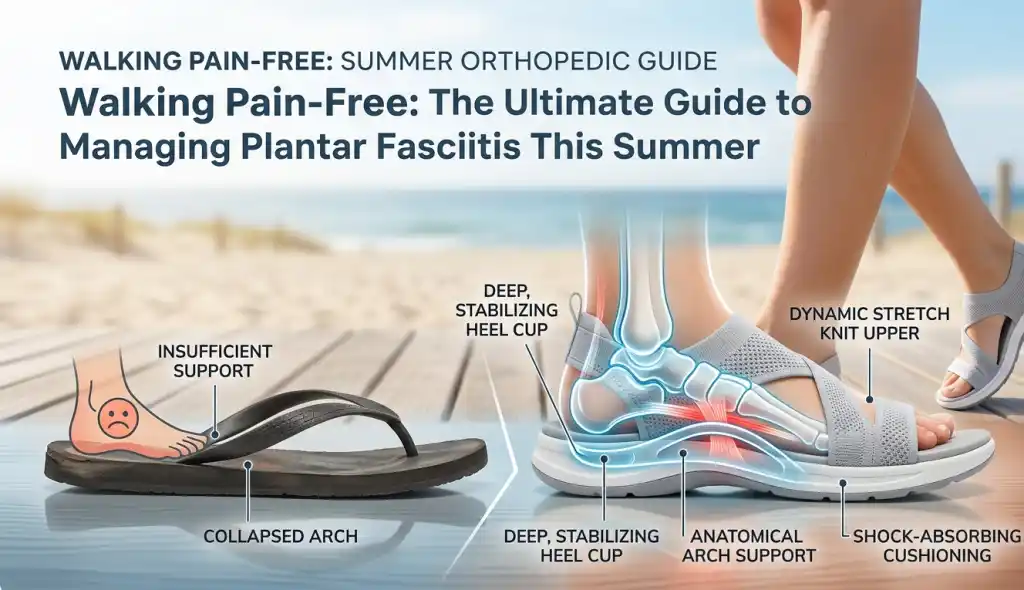
Most mainstream summer slides and flip-flops offer zero structural integrity. They are essentially flat sheets of foam. When your foot presses down, your arch collapses downward (a movement known as overpronation). This downward collapse forces the plantar fascia ligament to overstretch and develop microscopic tears near the heel base, resulting in chronic inflammation and severe pain.
The Cycle of Morning Pain
When you rest or sleep, your body attempts to heal these micro-tears by tightening the ligament. The moment you step out of bed in the morning, your body weight abruptly forces that tightened tissue to stretch out again, re-tearing the healing fibers. This frustrating cycle can turn simple daily routines into a painful ordeal.
The Three Elements of Real Orthopedic Engineering
We designed the Ninikua Womens Orthopedic Sandals and Sport Slides from the ground up to break this cycle of pain. Our recovery footwear does not just cushion your feet; it actively stabilizes your skeletal alignment while you move.
Our remedial sandals rely on three core pillars of structural support:
1. Deep Stabilizing Heel Cups
A flat footbed allows your heel fat pad—your body’s natural shock absorber—to flatten out and spread sideways, losing its protective density. Ninikua sandals feature an anatomically contoured, deep heel cup that cradles your heel. By keeping your heel locked securely in place, it compresses your natural fat pad directly beneath the bone, absorbing the heavy shock of hard pavement and shielding your joints from repetitive micro-trauma.
2. Anatomical Arch Contours
True relief requires structural realignment. Our engineered footbeds feature a rigid yet cushioned arch support that bridges the gap beneath your foot. By maintaining your arch at its natural height, our design stops overpronation before it starts. This structural alignment distributes your body weight evenly across your entire footbed, taking the localized, burning pressure off your sore heels.
3. Friction-Free Stretch Knit Uppers
Traditional orthopedic footwear can feel heavy, hot, and restrictive. We pair our therapeutic outsoles with premium, breathable woven uppers. The highly elastic knit fabrication stretches dynamically to accommodate natural foot swelling, bunions, or wide foot shapes. Because the soft textile eliminates rigid friction points, you can say goodbye to painful blisters and chafing during long summer strolls.
Daily Habits for Summer Foot Wellness
While changing your footwear is the single most impactful step you can take, combining your new sandals with these quick, daily wellness habits can speed up your recovery significantly:
- The Morning Stretch: Before your feet even touch the floor in the morning, gently pull your toes back toward your shin with a towel or your hand. Hold for 30 seconds to safely stretch out the plantar fascia before placing weight on it.
- The Frozen Water Bottle Roll: After a long afternoon out, roll the arch of your bare foot over a frozen plastic water bottle for 10 to 15 minutes. This provides an excellent deep-tissue massage while simultaneously reducing localized inflammation.
- Avoid Barefoot Steps: Walking barefoot on hard hardwood or tile floors can instantly re-injure a recovering ligament. Keep a pair of supportive Ninikua slides right next to your bed so you can step straight into therapeutic support the moment you wake up.
Recovery Doesn’t Mean Staying Seated
Chronic foot pain can take a toll on your mental and physical well-being, making you feel isolated or forced to skip out on summer activities with friends and family. Your foundation deserves proper care, and recovery should never mean sitting on the sidelines.
Step into a pair of Ninikua Remedial Sandals today, experience the transformative difference of clinical arch support, and rediscover what it feels like to walk long distances completely pain-free again.
Leave a Reply